THE STORY BEHIND THE CRAFT
Forty hours, two shuttles and a border that never lets go
Meenakshi Sundaram
Siruvanam, Kanchipuram, Tamil Nadu
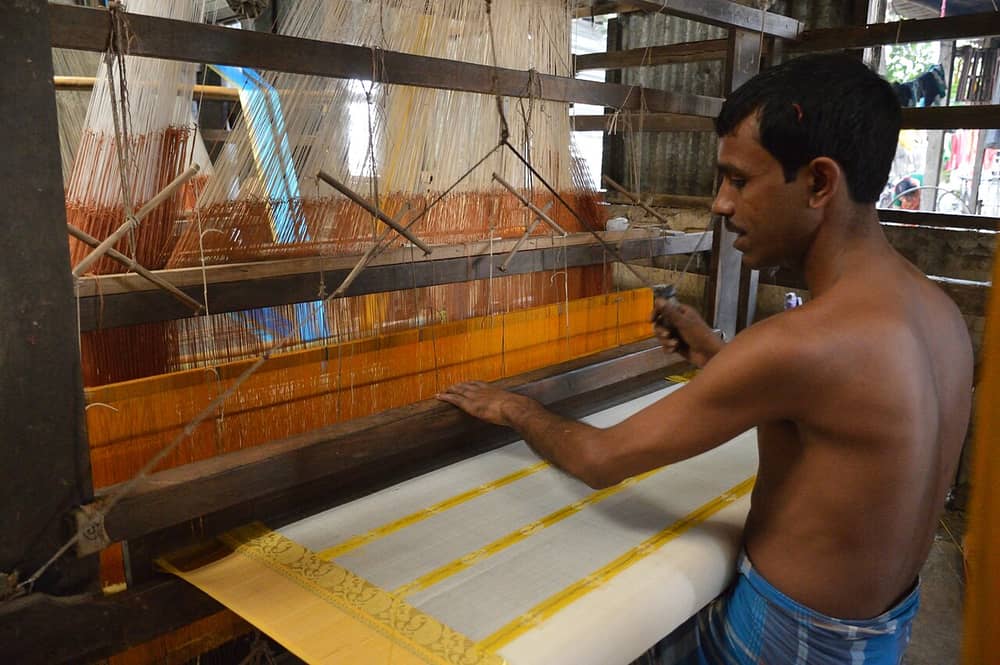
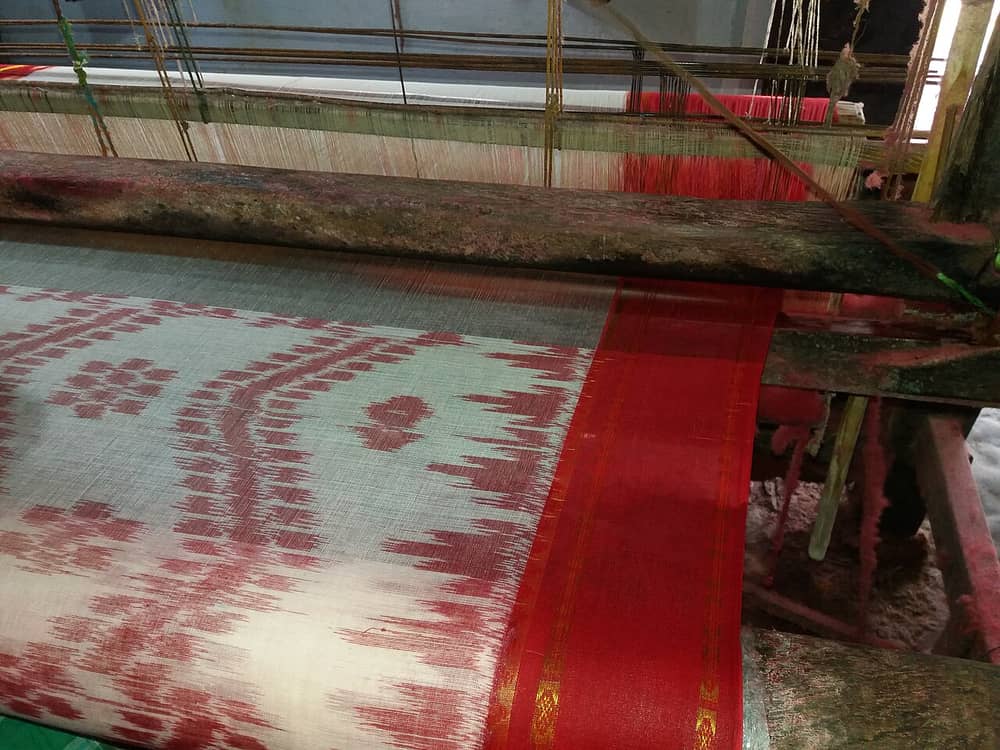
Representative photo: Biswarup Ganguly · CC BY 3.0 · credits
Meet the maker
Meenakshi Sundaram
Handloom silk & cotton weaving
“A saree remembers every hour you give it. You can feel it when you wear it.”
Meenakshi (a fictional demo maker) weaves in the front room of her home, where a pit loom has stood for three generations. The sound of the shuttle is the first thing neighbours hear each morning.
Meenakshi learned to throw a shuttle at twelve, sitting beside her grandmother at a loom sunk into the floor of their home. Today she weaves silk on commission and cotton for everyday wear, and trains two young women from her street in the evenings. She plans every border on graph paper before a single thread is set.
Visit profile- Making time
- About 12 days
- hours of handwork
- 40
- Materials
- Mulberry silk, Zari (silver-coated copper)
- Origin
- Kanchipuram, Tamil Nadu
- Craft
- 22 years of practice
How it is made
Step by step
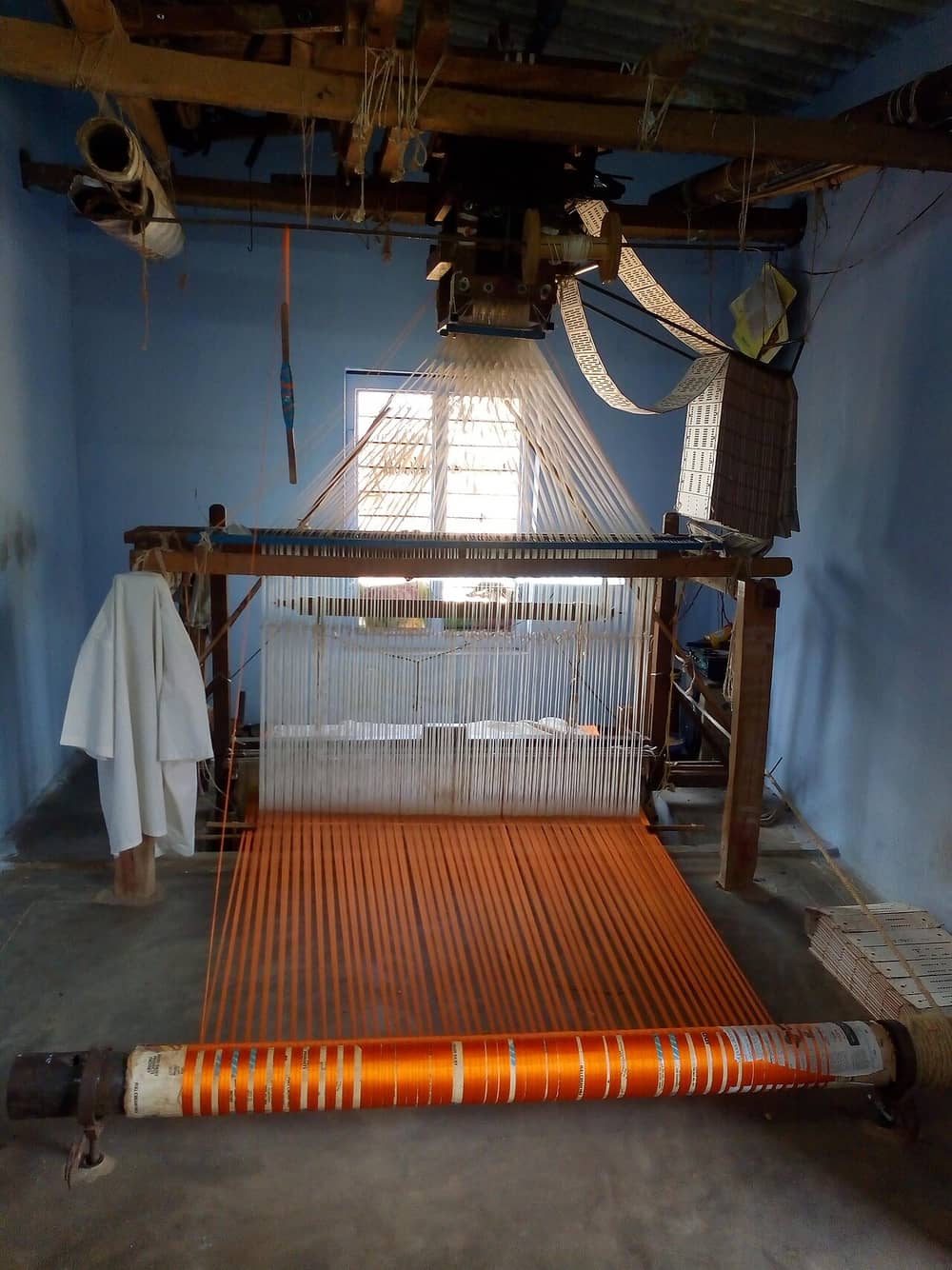
A silk saree begins weeks before weaving: the yarn is twisted, dyed, dried in the sun, then wound and stretched into a warp of several thousand threads. The border is woven with separate shuttles and interlocked with the body by hand — the korvai technique — so it will never separate.
- 01
Dyeing the silk
Degummed silk is dyed in small batches and dried in shade so the colour stays even.
- 02
Setting the warp
Thousands of threads are stretched along the street and wound onto the beam at dawn.
- 03
Drafting the border
The temple motif is planned on graph paper and translated into lifted threads.
- 04
Weaving with korvai
Two weavers pass shuttles to each other, interlocking border and body by hand.
- 05
Finishing
The saree is cut from the loom, checked thread by thread, folded and pressed.
Tradition & history
Handloom silk weaving
Silk weaving around Kanchipuram is centuries old and closely tied to temple towns, whose architecture inspired motifs like the temple-tower border and the mango (paisley).
Materials
Mulberry silk for body and border; zari made of silver-coated copper thread for the pallu.
Sourcing
Silk yarn is purchased from a weavers' society depot; zari from a licensed supplier in the district.
Impact & fair price
How this price is made
The listed price is set by the maker from her own material costs and hours at the loom. Buying direct means the order is placed with her, not a middleman.
Maker's share (estimate)
- Materials
- ₹3,900
- Labour (40 hrs) × ₹120
- ₹4,800
- Listed price
- ₹9,950
An estimate from material cost, hours and margin — not an official market price.
Own this piece
Temple Border Silk Saree
₹9,950
Border and body are woven separately and interlocked by hand — thousands of times — so the border never tears away.
Story QR tag
Scan to open this page. Print it as a tag for the product.
THE STORY BEHIND THE CRAFT
Temple Border Silk Saree
by Meenakshi Sundaram · Kanchipuram, Tamil Nadu
Scan to open the story
Reviews
- A
Ananya (demo)
The border is even more beautiful in person. Loved reading how it was woven.
- K
Karthik (demo)
Heavy, rich silk. Packaging was simple and plastic-free.
More stories
Temple Border Silk Saree
₹9,950